Organise a private property sale from enquiry to handover
Plan a private Costa del Sol property sale with practical steps for documents, advertising, enquiries, viewings, offers, advisers and the handover.
At a glance
- Plan the owner’s work and the services you still need to appoint.
- Keep property information, enquiries and offers consistent and recorded.
- Use a practical workbook to organise adviser handoffs and completion.
Selling a Costa del Sol home without an estate agent means taking responsibility for the work an agency might otherwise organise: preparing information, advertising, answering enquiries, arranging viewings and keeping discussions moving. It also means being clear about the jobs that still belong with your chosen legal, tax and technical advisers. A private sale can be organised carefully, but it needs a complete plan.
Use this guide with the main selling guidance and the private-sale workbook. It is a workflow for an owner preparing a sale, not a ready-to-sign contract. The relevant arrangements depend on the property, your circumstances and the actual terms being discussed.
Decide which work you will undertake yourself
List the tasks before deciding that a private sale will be simpler or cheaper. Can you prepare accurate information, respond consistently to enquiries, attend viewings and coordinate the process in the languages required? If you live abroad, who can provide access and deal with practical problems? Include the cost of photography, advertising, travel and your own time.
Compare that workload with the services and terms of an agency appointment using the estate-agent appointments guide. If an existing agency agreement or buyer introduction is involved, have its position explained before assuming that a direct conversation removes every commission or contractual issue. Keep the actual agreement available for review.
Build an accurate property information pack
Begin with the seller document checklist. Ask your adviser which current records are needed and organise them by purpose: identifying the property and seller, explaining ownership and charges, describing shared arrangements and supporting statements about the home. Keep an index showing what has been requested, received and checked.
Make a separate list of fixtures, furniture and associated spaces proposed for inclusion. Distinguish what is documented from what still needs clarification. Do not publish sensitive records simply to make the listing look comprehensive. Arrange a suitable way to share the relevant material with verified advisers and serious enquiries at the appropriate stage.
Set an asking price with a clear method
Record the evidence behind your proposed price and the limits of that evidence. Asking prices for other homes do not establish their eventual sale prices. Differences in condition, floor-area basis, outlook, access and ownership costs can make apparently similar properties difficult to compare. Keep a dated record of the homes and information you considered.
The valuation and negotiation guide helps structure the decision. Agree in advance how you would assess an offer, including finance, proposed timing and unresolved checks. Your preferred number matters, but a negotiation also needs a workable route from enquiry to completion.
Create an original and consistent advertisement
Use photographs that you are entitled to publish and a description you can support. Identify the basis of floor areas, describe included spaces carefully and avoid presenting possible alterations or rental income as established outcomes. Check that the same price, inclusions and wording appear wherever you advertise. Update or withdraw old versions when the information changes.
The listing decoder is useful from the seller’s side: it shows the questions your description should be ready to answer. The energy ministry’s certification guidance also explains the framework for energy information in property advertising. Have the applicable documentation requirements checked for your home.
Handle enquiries with one record
Keep an enquiry log with the date, the person’s preferred contact channel, the information requested and the next action. Ask practical questions that help organise a viewing, such as the proposed purchase timetable and whether financing is part of the plan. Avoid collecting identity or financial documents simply because you are curious about an enquiry.
Use the property records and privacy guide when deciding what to request or share. Agree how advisers will carry out any checks within their roles. Keep access to your own enquiry records limited, and do not turn a publicly shared viewing calendar into a list of personal contact details.
Prepare the viewing and the follow-up
Plan access, the route through the home and the information available to answer ordinary questions. Store private paperwork and valuables appropriately. Be clear about who will attend, how changes are communicated and what happens if someone arrives outside the agreed arrangement. A calm viewing is easier when both sides understand what has been booked.
Afterwards, record questions rather than trying to supply immediate answers to everything. Refer legal or technical issues to the appropriate person and send consistent follow-up information. The sale preparation guide can help you make the presentation clear while keeping cosmetic improvements distinct from the building’s condition.
Record the offer before negotiating terms
Write down the amount, proposed inclusions, funding arrangements, suggested dates and any conditions or dependencies discussed. Confirm what remains an enquiry and what needs professional drafting. If several offers exist, compare them using the same headings. Keep a dated account of changes so an informal conversation does not become a source of conflicting assumptions.
Have your adviser explain the legal effect of proposed documents before you sign or accept money. The reservation agreement guide shows why labels alone do not explain an agreement. A buyer’s offer template or a short message is not a substitute for advice on the actual proposed transaction.
Set the adviser handoffs early
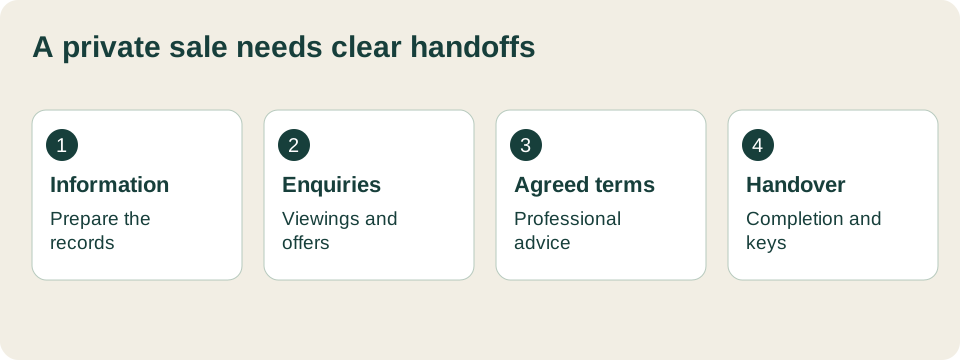
Agree who prepares the relevant paperwork, answers transaction enquiries, communicates with the other side and organises the completion arrangements. Give advisers the information they need in a usable format. An unresolved issue should have a named next step, not sit in several email chains waiting for someone else to act.
Use the professional roles guide to define those appointments. For British owners, the UK government’s Spain property guidance provides background on independent legal advice and the Spanish process. Check the suitability and agreed scope of the people you engage.
Plan payments and your actual proceeds
Keep the proposed price separate from the money you expect to retain after the sale. Use the seller costs guide and proceeds calculator with assumptions checked for your circumstances. Ask your adviser about the relevant tax and mortgage matters rather than subtracting a generic percentage.
Agree payment arrangements through the appropriate professional process and follow the secure payment guidance. Independently verify changes to payment instructions using an established channel. Do not send money, release access or accept a changed arrangement solely because an urgent message appears to come from someone involved.
Prepare completion and a practical handover
Confirm the agreed possessions, keys, access devices, meter information and arrangements for utilities or management. Keep a record of what is handed over and when. If you are selling from abroad, settle the representation and access arrangements early using the remote selling guide. Do not leave essential decisions until travel has already been booked.
Maintain a final open-items list and ask your advisers which post-completion actions remain. The practical move out, the formal sale and later administrative work are different parts of the same project. Give each a responsible person and retain the records you are advised to keep.
Understand the context of a private sale
The Spanish consumer ministry distinguishes a private seller’s transaction from a professional’s own activity. That distinction is a reason to obtain advice for the actual sale, rather than copy information written for a developer or agency. The Junta’s purchase-contract guidance provides further context. Sources checked on 9 November 2026.