Plan the complete journey across the local networks
Plan Costa del Sol public-transport journeys with official rail, metro and bus sources, ticket checks, connections and return alternatives.
At a glance
- Separate rail, metro, urban buses and interurban operators.
- Check the actual service day, complete journey, ticket conditions and final approach.
- Keep route sources dated and maintain a realistic disruption alternative.
Public transport on the Costa del Sol involves several networks and operators. Start with the complete journey you need, then identify which services cover each leg. A station near a home is useful only if the route, service day, connection and final approach match the destination. Avoid choosing a property from a transport map without testing how the household would actually use it.
This guide is a method for planning daily journeys around Málaga and the coast, not a copied timetable. Service patterns, fares and concessions change. Check the responsible operator for the date of travel and retain the date checked. Use the worksheet to compare work, school, appointments and evening returns on a consistent basis across shortlisted addresses.
Separate rail, metro and bus networks
Use Renfe’s Málaga Cercanías information for its local rail services and current notices. The official network information identifies C1 towards Fuengirola and C2 towards Álora. Check the current stopping pattern and departure for the actual journey. Do not treat a rail line serving part of the coast as evidence that the same rail journey reaches every western or eastern coastal town.
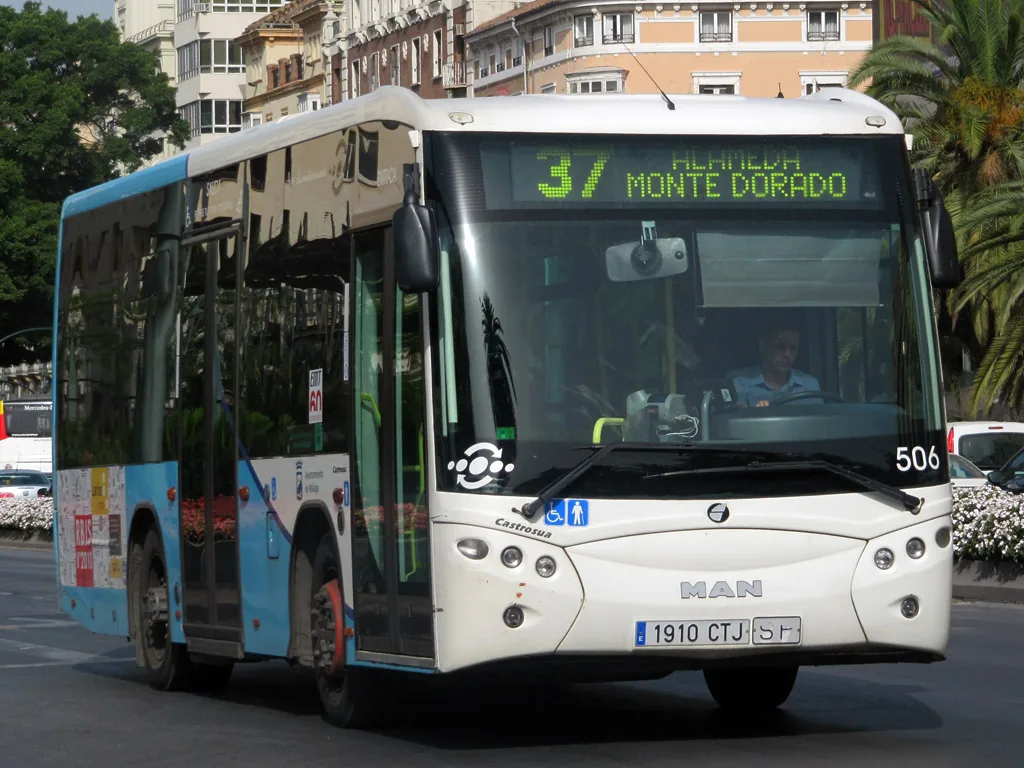
For metro travel, consult Metro de Málaga. For urban buses in Málaga city, use EMT Málaga. The Málaga metropolitan transport consortium provides a further official starting point for its area and participating services. These are distinct sources. Verify the relevant operator, interchange and ticket conditions rather than assuming that a pass or payment method has universal coverage.
Define the journey before comparing the fare
Record the exact home entrance, destination entrance, required arrival and expected finish. Include the day of the week and whether the journey repeats. A cheap ticket does not make a route useful if the first departure misses work or the return finishes before the activity ends. Put the practical requirements ahead of the fare comparison and keep a backup where the timing is tight.
Use the transport-access location guide when comparing property areas. If the household hopes to avoid owning a car, use the car-free living test as a separate routine check. Public transport can form part of a workable plan without meeting every journey on its own. The comparison should show the gaps and their alternatives rather than hiding them inside a positive description of the town.
| Journey record | Detail to enter | Why it matters |
|---|---|---|
| First leg | Walk, bus or other route to the main service | A nearby station may still have an awkward approach |
| Main service | Operator, line, direction and date checked | Similar names do not prove the right route |
| Connection | Transfer location and usable margin | A theoretical connection may be unsuitable for the household |
| Final leg | Entrance, gradient, steps and collection point | The trip ends at the destination, not at the stop |
Check the actual day and return direction
Read the operator’s current information for weekdays, weekends and holidays as applicable. Check for planned works, notices or temporary changes before relying on an old saved route. Where the household travels regularly, record a source to revisit rather than copying a timetable onto a property checklist and treating it as permanent. Put the date beside any departure time used in a comparison.
Check both directions. A convenient outward stop may not have an equally convenient return stop, and the last useful service may depend on a connection. Include the time needed to leave the destination and reach the departure point. Do not plan an evening around catching a service at the exact moment an event is expected to finish. Ask the operator about any unclear part instead of inventing a margin that appears precise.
Understand what the ticket covers
Before buying a pass, confirm eligible services, zones, validation, transfer conditions, validity dates and any identity or application requirements. Separate ordinary fares from temporary promotions and concessions. A visitor’s discounted journey or an old resident’s arrangement should not be presented as the standard household price. Use the current official terms applying to the person and trip.
Record the total cost of the necessary legs, including an alternative where the normal return is unavailable. Keep any deposit or card purchase separate from recurring travel. The cost-of-living guide helps bring these inputs into a household basket without creating an unsupported monthly transport average. Where a quotation or fare remains unverified, mark it as an assumption with a date for checking it.
Ask about access at every interchange
Check station and stop access, steps, lifts, walking distance and the boarding arrangements relevant to the traveller. Ask the operator about assistance or accessibility information for the particular service. Do not infer a complete accessible journey from a symbol attached to one station. A lift at the starting point does not answer the question at a transfer or the final destination.
For a household with a pushchair, luggage or limited walking capacity, test the actual route where practical. Allow the person who will use it to assess the relevant conditions. If a property includes convenient parking, keep that as a separate alternative using the parking and garage brief. It should not conceal a missing public-transport connection in a home advertised as suitable for a non-driver.
Compare different parts of the coast through the same tasks
Take three hypothetical addresses: one in Málaga city, one on the central coast and one farther west or inland. Give each the same work, care and evening destinations. Use current operator information to build each route independently. Do not award the Málaga address every advantage or describe the inland option as impossible before checking its actual services and the household’s flexibility.
Use the inland location shortlist for wider service and property questions. A route that is satisfactory for a flexible daytime visit may not suit a fixed early shift or school collection. Keep those distinctions visible in the comparison. These are research scenarios rather than published journey recommendations; each actual trip still needs its own operator check, particularly when a connection or access arrangement determines whether it works.
Maintain a disruption alternative
List the journeys that would be difficult if a normal service is cancelled or an interchange becomes unavailable. Identify another route or suitable paid transport and check its practical terms. Do not rely entirely on a neighbour providing lifts. If the household has a vehicle as a fallback, confirm the separate driving and vehicle requirements rather than assuming occasional use removes those obligations.
Keep a simple plan for contacting work, school or the appointment provider when delayed. The plan should use verified official channels and normal household contacts, not a public document containing private details. A transport comparison is stronger when it records uncertainty honestly. A single successful trial journey should not become a guarantee about future reliability, just as one disrupted day should not automatically condemn a whole area.
Use the network information as a living record
Download the journey worksheet below and retain only the routes and conditions you have actually checked. Record the source, service date and access questions still outstanding. Review before a material commitment and when work, school or regular appointments change. Update the route rather than rewriting an unsupported claim that a particular town has excellent transport.
Return the result to the Costa del Sol living plan. The objective is a set of usable everyday journeys with realistic alternatives and transparent costs. That helps you choose an address around the life you intend to lead, while keeping transport facts tied to the operator’s current information instead of a timetable that may already have changed.
Download the public transport worksheet to record your own evidence, unresolved questions and next actions. Sources checked 25 November 2026; recheck the current official procedure before relying on a time-sensitive instruction.